
CUSTOM DESIGNED SENSORS
E-Nose | NQR | Optical | Mag | RF
CUSTOM DESIGNED SENSORS
E-Nose | NQR | Optical | Mag | RF
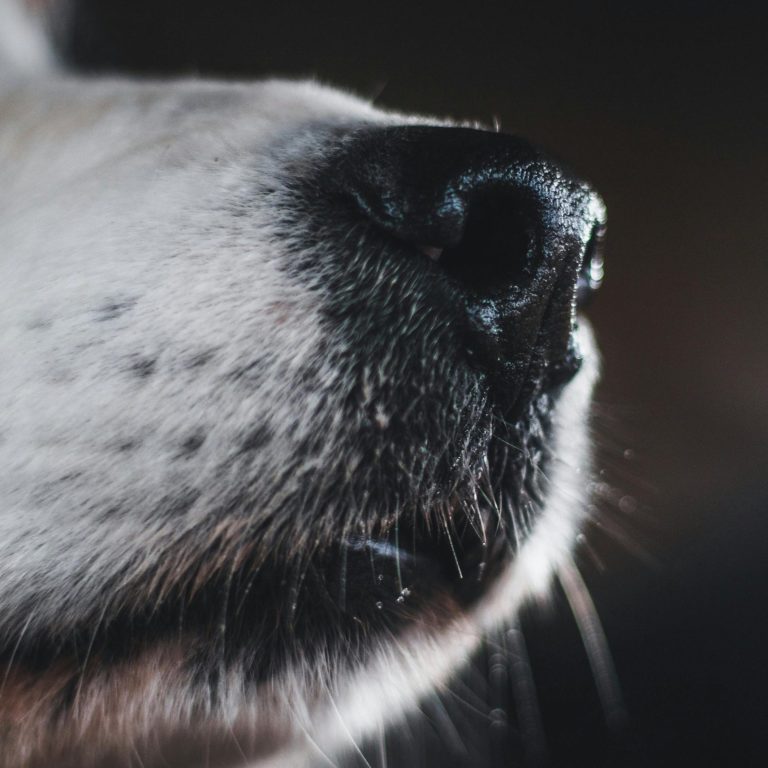
E-Nose technology is an emerging field of physics, spanning multiple branches, Biological, Chemical, Atmospheric, Medical, Environmental, Atomic & Molecular being the most common. The nose of a dog (and other animals) is generally estimated to be 10,000* to 150,000 times more sensitive than a human's, with some specialised breeds like bloodhounds reaching up to 1million times more sensitive, which have up to 300 million olfactory receptors compared to roughly 6 million in humans.
About E-Nose Technology
XYNETIQ E-Nose design uses several sensing technologies to provide a full spectrum of sensitivity, using an electronic sensor array that reacts to air pollutants by analysing a digitised ‘fingerprint’ that can be attributed to a specific chemical content or odour. This is obtained by taking a sample of gas, liquid, or solid, which is passed through the sensor array, where a complex interaction occurs between the sensor array and the chemicals. This reaction process results in a complex set of electronic signatures of the sample, which is then processed by the CPU.
Chemicals are substances composed of atoms, which are the fundamental building blocks of matter. When two or more atoms combine chemically, they form molecules, which can be composed of identical atoms (elemental molecules) or compounds, which are chemicals formed from different elements, sometimes organised as molecules or as extended lattice structures.
Commonly applied sensors include metal oxide semiconductor, conducting polymer, acoustic wave, field-effect gas sensors, pellistors, and fibre-optic sensors. The most commonly used sensors are conducting polymers, bulk acoustic devices and metal oxide semiconductors.
Issues Addressed
The objective and main sought-after benefit of e-noses is continuous feedback of “odour levels”. The main drawback of e-noses is the calibration phase. The non-linear synergy between different chemicals and the continuous sensor drift (loss of sensitivity due to age, temperature, humidity, etc.) requires a more advanced calibration method than what has been historically implemented in electronic noses. Other technical issues, including mould and contamination of the sample lines, have been widely reported for most electronic noses available on the market.
Development Challenges
The majority of development in electronic nose technology has been focused on the development of sensitive sensors. This approach ignores the fundamental challenge with machine olfaction, which is the simulation of odour perception, not detection. Human odour perception is the interpretation of the signals which are received from the olfactory bulbs. Therefore, they rely heavily on the human brain. Any electronic nose that would mimic the human olfaction must also simulate the perception of the odour, which would require simulation of the entire human olfactory system. Applying ML and AI algorithms in neural networked processing of the sensor data, we can achieve the same outcome, with better sensitivity. Additionaly using high-speed processing, this can be performed many thousands of times faster. Using AI signature recognition from extensive data obtained from ML, the accuracy and speed of detection become comparable to that of a dog's nose.
XYNETIQ has developed and patented an advanced technology that addresses and overcomes the issues that cause other e-nose sensors to deteriorate rapidly over time and render them unsuitable for long term deployment. Mostly, e-noses are located in busy areas where many people are present for long periods of time, or in confined spaces, e.g., cruise ships, transport hubs, and trains/aircraft. The XYNETIQ E-Nose has a unique built-in feature that ensures our system remains in calibration and gives a much longer service life than others.



We need your consent to load the translations
We use a third-party service to translate the website content that may collect data about your activity. Please review the details in the privacy policy and accept the service to view the translations.